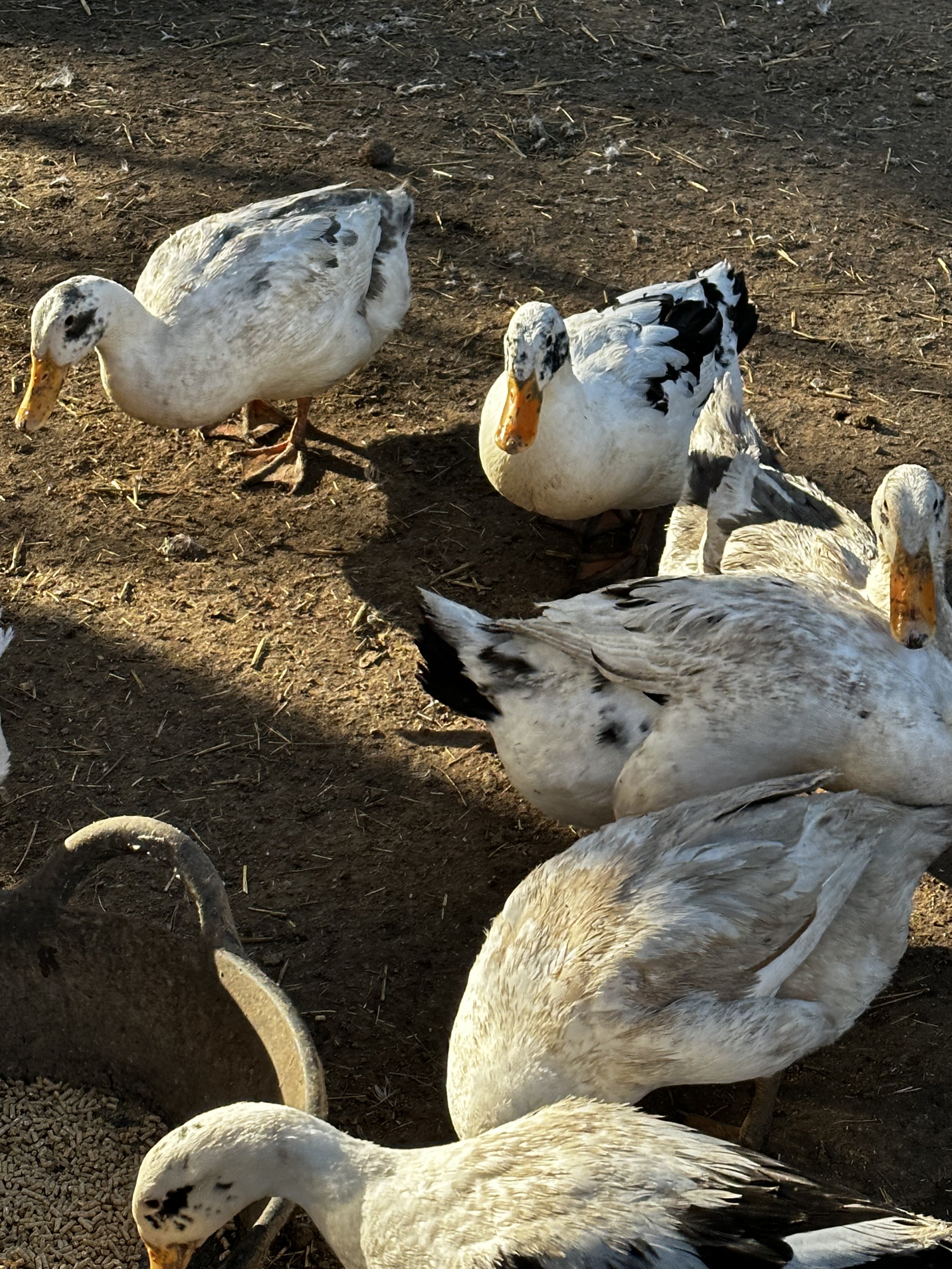
Ancona Ducks
At Waterloo Mountain Farm, we’ve always been drawn to animals that are not only beautiful, but also practical, resilient, and rooted in agricultural tradition. Ancona ducks check all of those boxes.
With their striking, mottled plumage and excellent utility as both layers and foragers, Anconas are a natural fit for small farms and permaculture-minded homesteads.
Why We Chose Anconas
Although chickens are the classic choice for the intrepid homesteader, I have always gravitated toward ducks. The eggs are superior, no contest. The meat is richer and more succulent. And the idea of keeping them makes all the more sense when both the eggs and meat are not widely available at stores. And if not for the huge mess they make, they would be a complete joy to keep. Just looking at them waddle around brings a smile to my face.
The Ancona duck is a somewhat obscure breed, and some people might even say it’s a stretch to call it a breed, as it’s origins are murky, and it is not currently recognized by the American Poultry Association (APA), though efforts are underway. I came across Anconas in The Resilient Gardener by Carole Deppe. An overall great book on creating gardens that can thrive with minimal inputs, her chapter on ducks were very formative for me. Deppe confirmed my bias that ducks were the perfect livestock for a permaculture homestead. She sung the praises of Anconas in particular, believing they foraged better than chickens, lay better at an older age and in the winter, are easier to keep out of the garden with two-foot fences, and are happy even during cold, wet winters. Add in their unique colorings and pattern to tell them apart and I needed little more to be sold.
The fact that Ancona ducks were listed at the time by the The Livestock Conservancy as in critical need of preservation confirmed my choice. By raising and breeding Anconas, we are not just producing eggs, but are helping support the continued existence of a valuable and underrepresented breed. And the hard work of breeders who are part of the Ancona breeding community has led to the Livestock Conservancy to change their conservation status from Critical, to Watch.
About Ancona Ducks
Excellent layers, often producing 200–280 eggs per year. Eggs are usually cream., sometimes with a grey bloom. But eggs can also more rarely come in blue or green.
Hardy and adaptable, capable of handling a wide range of climates
Strong foragers, helping reduce feed costs when given space to roam
Calm and manageable, making them a good fit for small farms and family settings
They are a true dual-purpose homestead duck, valued not just for production, but for how well they integrate into a working system.
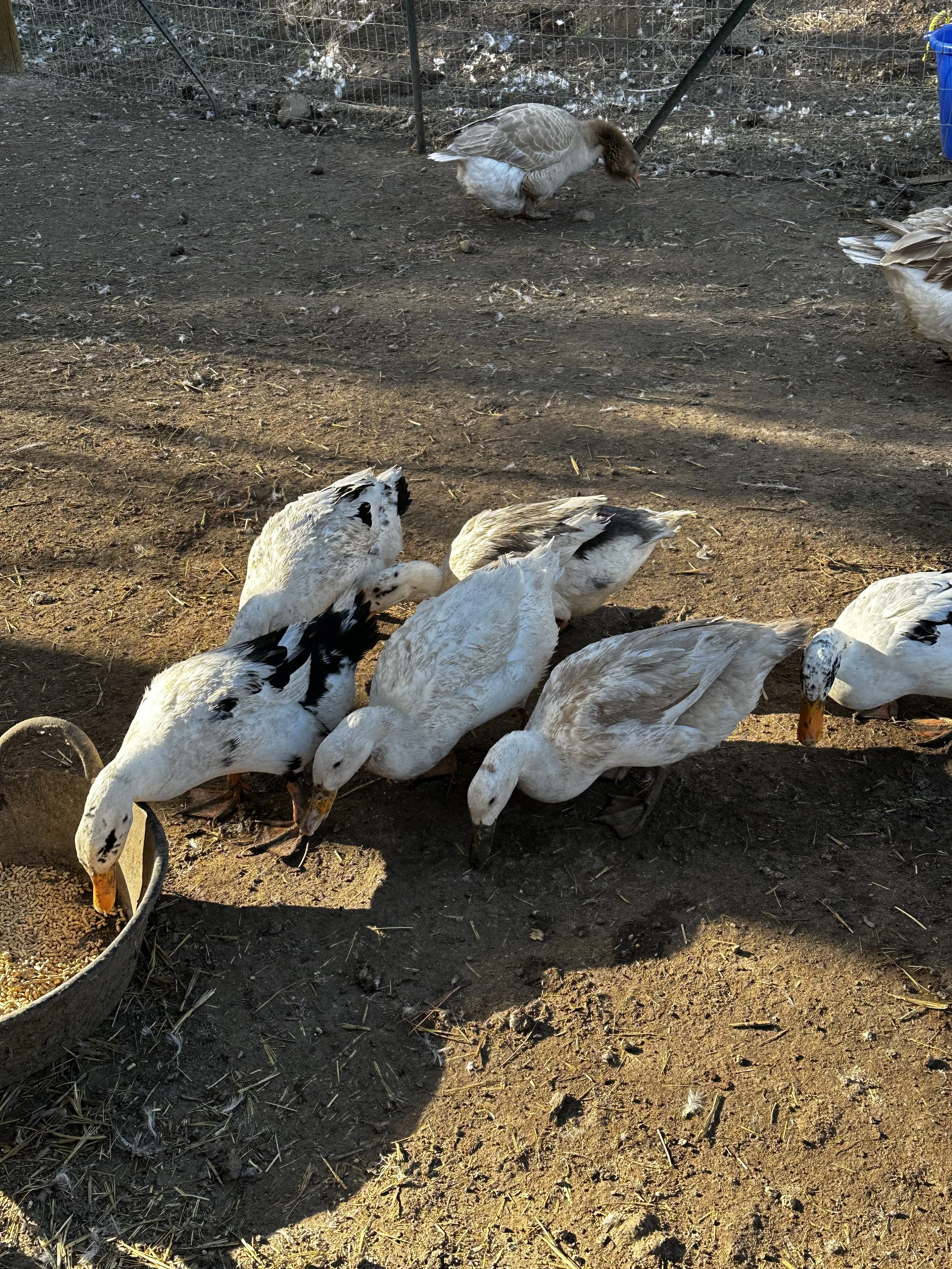
One of the most distinctive features of the Ancona duck is its broken, mottled coloring. No two birds are exactly alike.
Their plumage is typically a mix of white with patches of Black, Blue, Chocolate, Silver or Lavender.
What makes them especially unique is that their markings can change subtly over time, with white areas increasing as they age. A duck you raise from a duckling will often look a little different a year later—a small but charming reminder that these are living, changing animals, not uniform production units.
Anconas in a Permaculture System
For us, ducks were always part of the long-term vision for the farm.
Anconas in particular fit well into a permaculture-style system, where animals play an active role in the health of the land. Their natural behaviors can be integrated into garden spaces, orchard areas, and pasture rotations.
They not only manage insects and pests, and convert forage into high-quality eggs, but are great at contributing fertility to the soil. Their droppings are considered ‘cold manure’, and can be added directly to garden beds without needing to age. This is unlike other commonly available sources of manure like chicken, horse and goat, which can burn plants due to their high nitrogen content. This makes their soiled bedding, which would ordinarily be a waste product, a valuable, and free mulch for our garden beds. We’ve even successfully grown our entire year’s worth of potato crop in just a couple piles of duck bedding!
Hatching Eggs and Ducklings
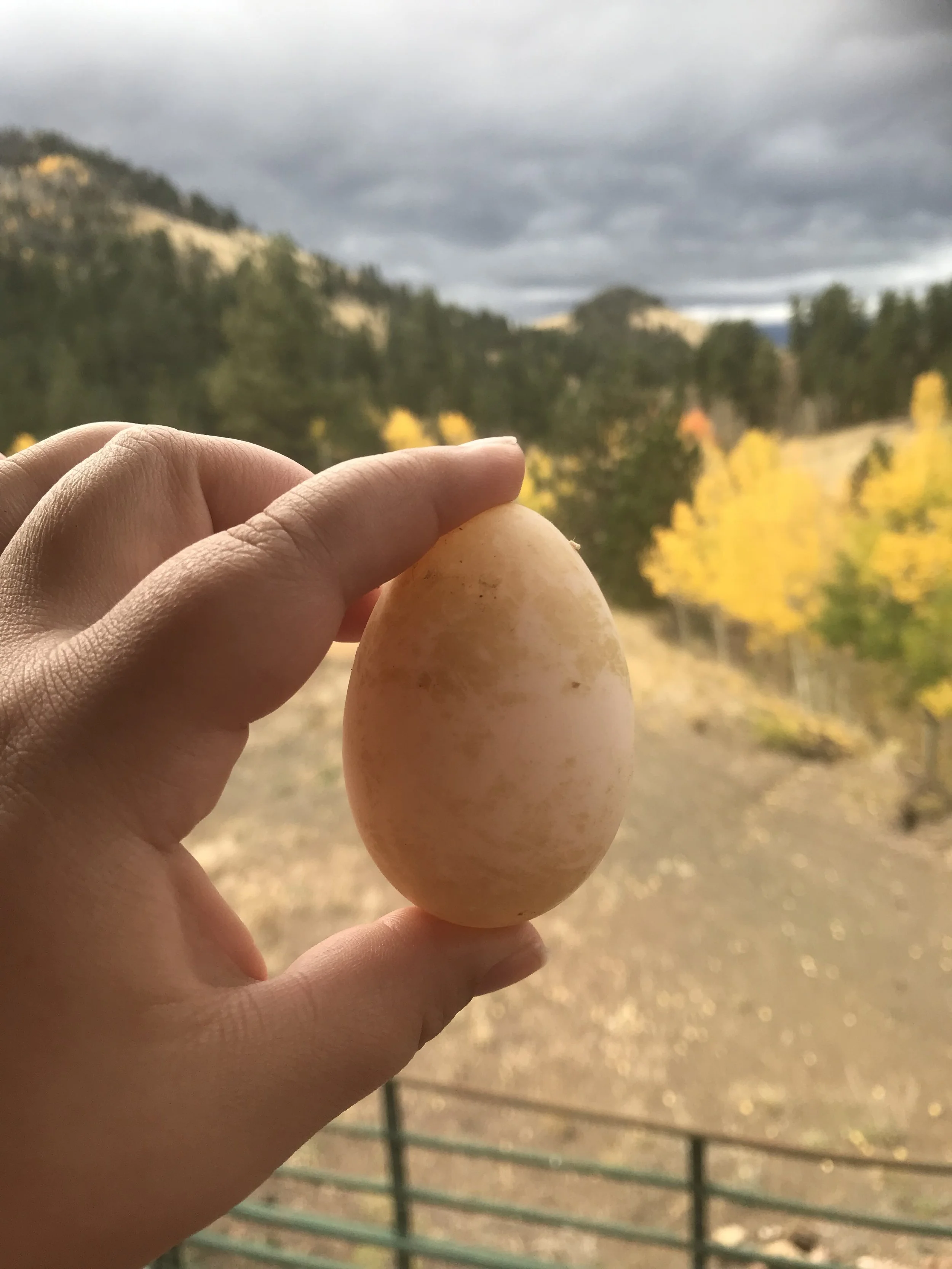
We periodically offer Ancona duck hatching eggs and ducklings for local pickup.
Because we are a small farm, availability is limited and seasonal. Eggs are usually available March-August. Limited numbers of ducklings are usually available in May.
Details:
Local pickup in Cotopaxi, Colorado
Eggs are collected fresh and handled with care
Availability varies depending on weather and laying cycles
Duckling orders can be special incubated upon request
Breeding stock is a variety of colors. Egg color is currently limited to cream.
If you’re interested in hatching your own Anconas, feel free to reach out for current availability.